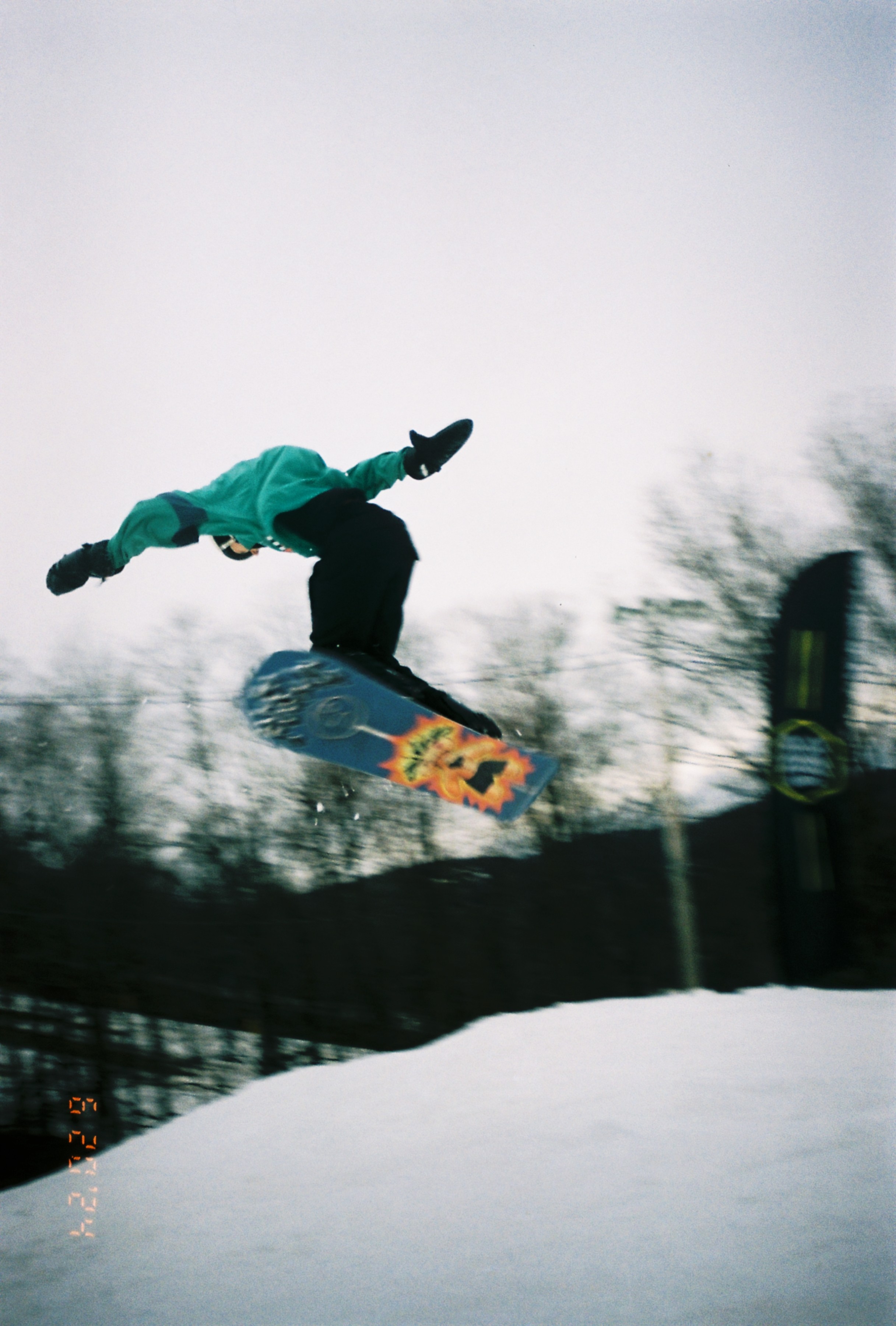
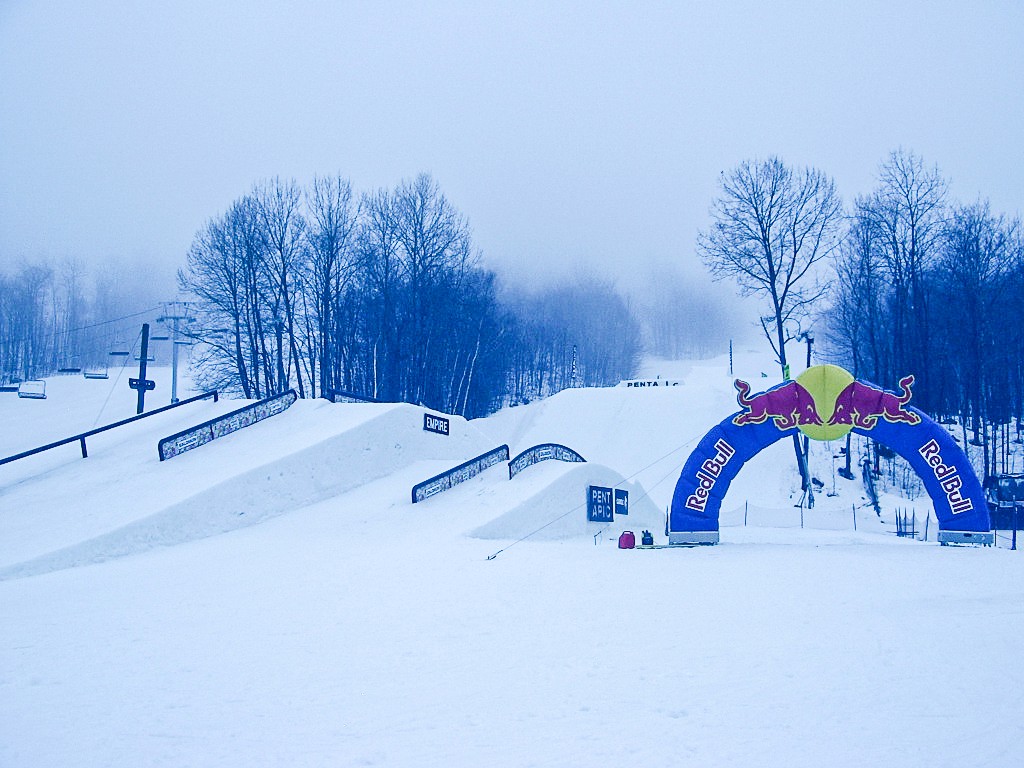
Snowboarding and freeskiing have always been about style, and nothing captures that raw, punk-rock energy like the gear from the golden era of park riding. Forget 4K 120fps slo-mo; we’re talking about the crunchy, vibrant, blown-out look of a CCD sensor digicam or the distorted perfection of a fisheye lens. Whether you’re hitting the rails at Mont Saint-Sauveur or hiking a feature in the streets, this is how to capture the true culture of the park.
The Holy Grail: Fisheye & Flash
Get Close, Then Get Closer
The defining look of 90s and 2000s skate and snowboard mags (think Transworld Snowboardingor early Method Mag) is the fisheye. You need to be dangerously close to the rail. The distortion makes the gap look bigger and the rail look longer. It puts the viewer right in the action. If you aren't getting sprayed with snow, you aren't close enough.
The Pop of the Direct Flash
On a grey, flat-light day in Quebec, a built-in flash is your best friend. It freezes the rider in mid-air and separates them from the grey sky. On older digicams (like a Canon SD1000 or Sony Cyber-shot), the flash has a harsh, distinct look that screams "core." It’s not polite, it’s not soft—it’s aggressive and perfect for jibbing.
Digicam Color Science
CCD vs. CMOS
Why do photos from 2005 look different? It’s the sensor. Old CCD sensors render colors with a film-like richness—reds are deeper, blues are punchier. They don't have the massive dynamic range of modern cameras, so the highlights clip and the shadows crush. Embrace this. That high-contrast look is exactly what makes these photos feel nostalgic and "pro" in a retro way.
Video Mode: The 4:3 Ratio
Don't just shoot stills. Switch that old digicam to video mode. You’ll get 640x480 resolution at 30fps, usually in a 4:3 aspect ratio. This lo-fi footage creates incredible Instagram Reels that stand out in a feed full of HD perfection. It feels like a home movie from the best winter of your life.