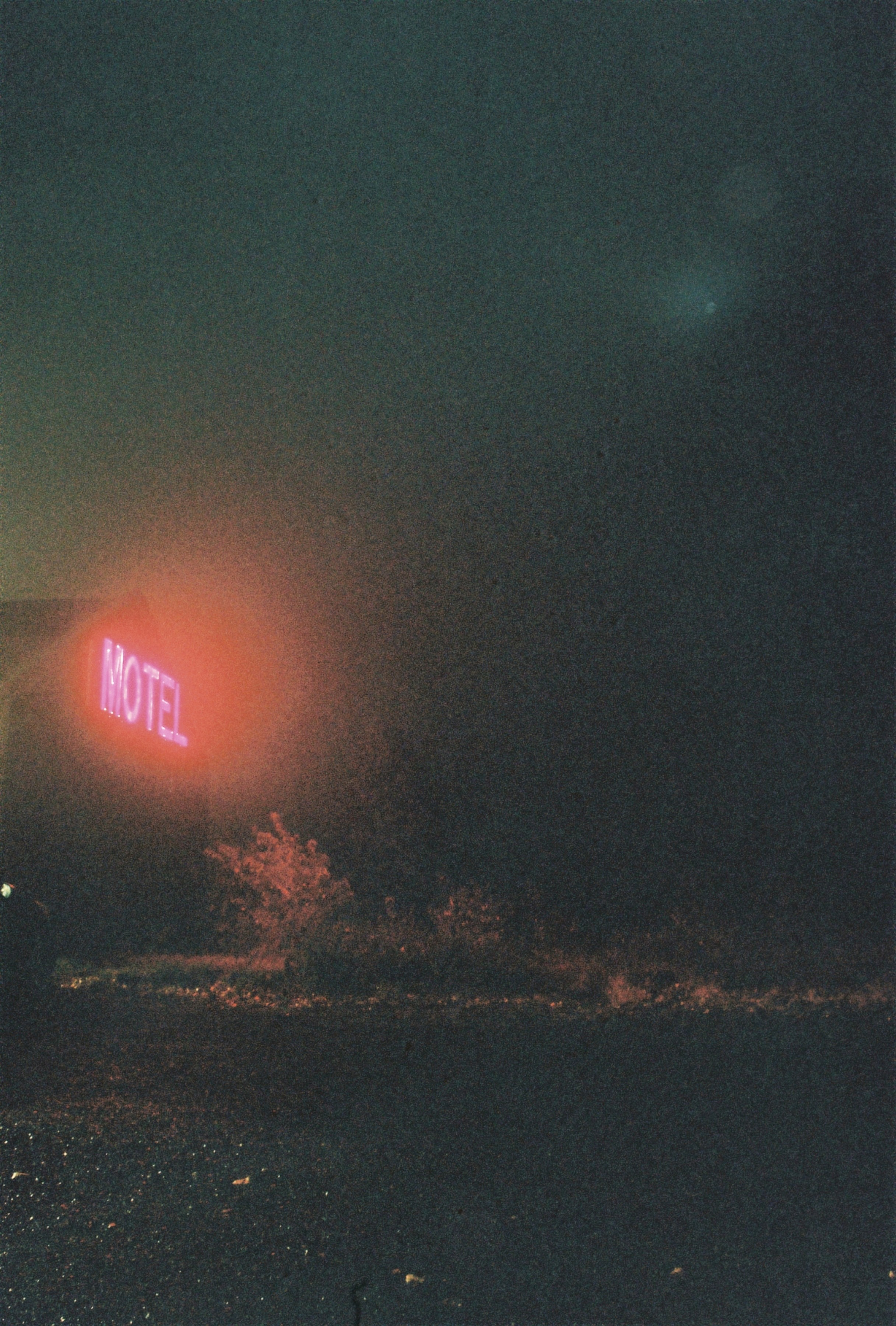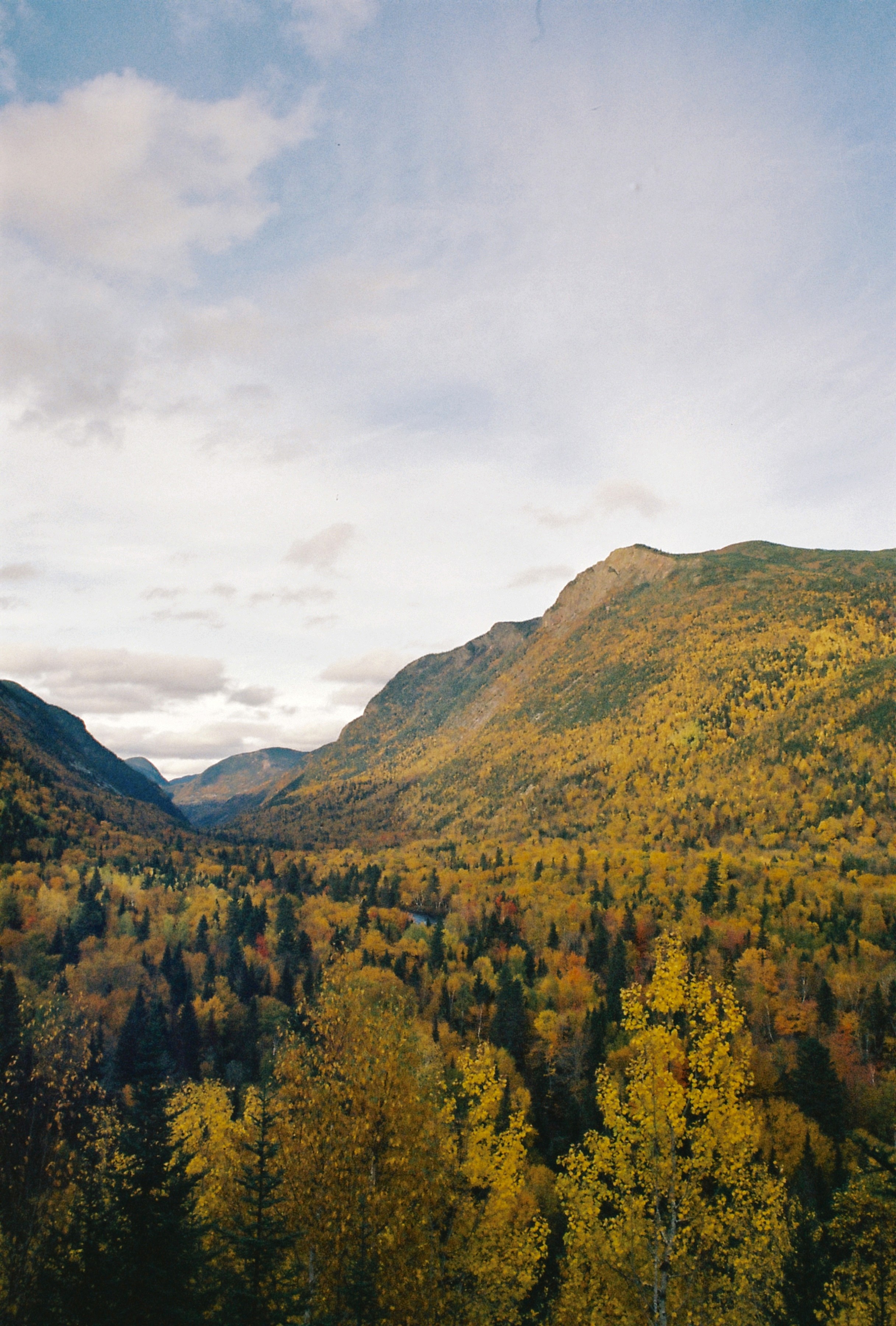
Charlevoix is a region of dramatic contrasts, where the Laurentian mountains crash into the St. Lawrence River. It’s a landscape that begs for the dynamic range and organic texture of 35mm film. From the quiet shores of St-Siméon to the grueling ascent of the Acropole des Draveurs, this region offers some of Quebec's most photogenic challenges. This blog guides you on how to capture its majesty authentically.
The Acropole des Draveurs Challenge
Earning the View
The hike up the Acropole in Parc national des Hautes-Gorges-de-la-Rivière-Malbaie is legendary. Carrying a heavy camera setup is tough, so a lightweight 35mm SLR or rangefinder is ideal. The summit offers a 360-degree view of the Malbaie River gorge. Use a polarizing filter to cut through the atmospheric haze and define the clouds against the deep peaks.
Panoramic Film Potential
The scale of the Hautes-Gorges is immense. If you have access to a panoramic film camera (like an XPan, or simply cropping 35mm), this is the place to use it. The horizontal grandeur of the river cutting through the mountains is best captured in a wide aspect ratio.
St-Siméon and the River
Coastal Tranquility
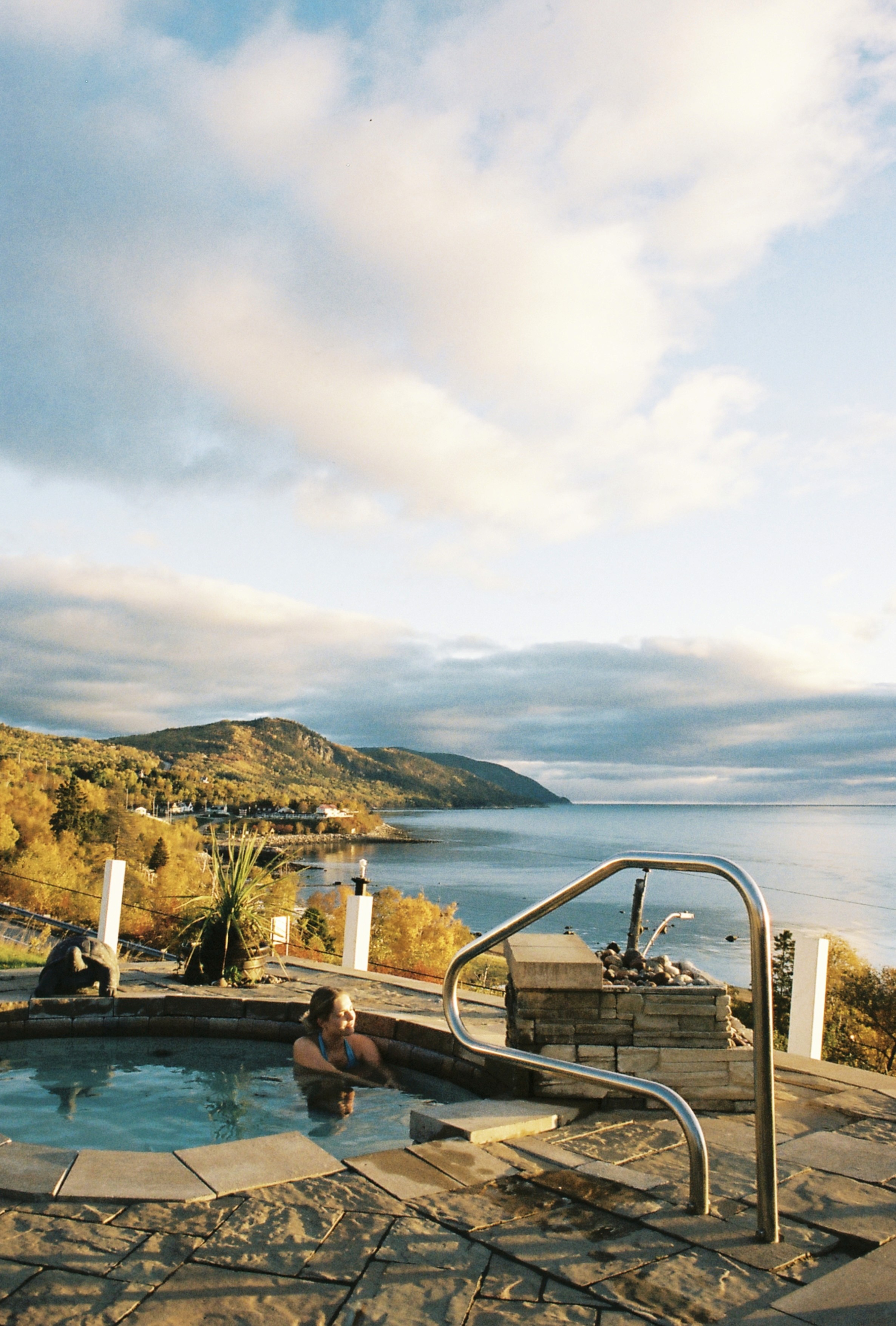
In contrast to the mountains, St-Siméon offers quiet, riverside beauty. It’s a place for long exposures. Use a tripod and a slow shutter speed to smooth out the water of the St. Lawrence, creating a minimalist, ethereal look. The ferry crossing creates a classic focal point—a moving element in a vast, still landscape.
Fog and Mood
Charlevoix is often blanketed in morning fog. This is prime time for black and white film (Ilford HP5 or Delta 3200). The fog simplifies the composition, removing distractions and focusing the viewer on silhouettes—a lone tree, a rock, a boat. High-grain film adds to this moody, atmospheric aesthetic.